
A Portrait Is Not a Photograph
A photograph can give a portrait its beginning. The painter decides how that beginning will become an image to live with.
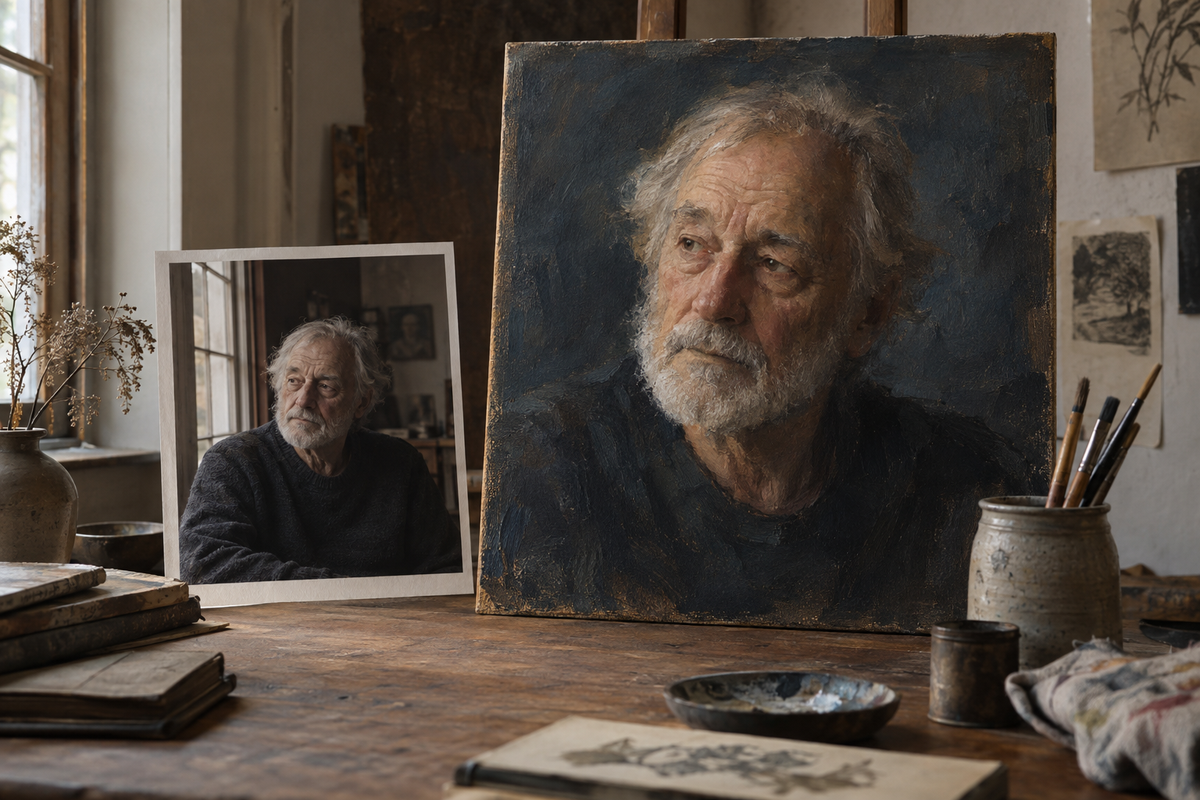
A photograph can give a portrait its beginning. The painter decides how that beginning will become an image to live with.
An imagined comparison of a photographic reference and painted interpretation. AI-generated imagery with a fictional sitter.
A photograph can be an extraordinary act of attention. It can hold the smallest gesture, preserve an encounter and become inseparable from our memory of a person. Painting does not need to diminish photography to offer something different.
The difference appears when a photograph becomes the source for a portrait. The painter is no longer responsible only to the instant the camera recorded. The image can be reconsidered: its emphasis, its atmosphere, the things it includes and the things it allows to fall away.
The accidental can become a choice
In a family photograph, a bright object may sit behind a head because that is where it happened to be. A sleeve may catch the strongest light. A chair may divide two people more forcefully than anyone noticed at the time.
A painter can decide whether those accidents belong in the portrait. The background may become quieter. The edge of a jacket may soften. The interval between two sitters may change. These alterations can make the image more faithful to the relationship you recognize, even as it becomes less literal about the original scene.
Recognition has its own priorities
When you recognize someone you love, you do not inspect every detail with equal attention. You notice a turn of the head, an expression that arrives before a smile, a habitual tension in the hands.
A portrait can organize itself around those particulars. A sharp eyelash may matter less than the weight of the eyelid. An impeccably rendered shirt may tell you less than the slope of the shoulders. The painter's judgment lies partly in discovering which relationships carry the person.
That is also why a smooth surface or an abundance of detail cannot guarantee likeness. Precision has to serve recognition.
One image can draw on several moments
An expression may come from one reference and information about posture from another. A second photograph can explain a shadow or confirm the shape of a hand. For a family group, separate pictures can help establish a composition that no single camera frame supplied.
This freedom requires discipline. The elements need to belong together in light, scale and space. The result should not feel like a collection of favored fragments. A coherent painting has its own internal logic.
Paint changes the experience of looking
A painted face is also a surface. Thin color, opaque passages, soft transitions and visible marks all affect how the image unfolds. At a distance, a few strokes may become a sleeve. Up close, they return to paint.
There is pleasure in that movement between recognition and material. The portrait offers an image of a person while remaining an object someone has worked on. The surface records decisions, including the choice to leave an area open or let an edge disappear.
No single finish is inherently more truthful. A restrained, finely handled portrait and a more openly brushed one can both contain close observation. What matters is whether the handling belongs to the image.

The room becomes part of the portrait's life
On a phone, a photograph appears among messages, errands and thousands of other images. Printed and framed, it can claim a very different kind of attention. A painting also asks to be encountered as a physical object with a particular size and place.
Its presence changes with viewing distance and the light of the room. You may notice it from the doorway or sit close enough to study a small passage. Over time, it becomes associated with that corner of the home, the furniture around it and the occasions on which someone pauses to look.

Permanence is a practice of attention
A painting is not an automatic guarantee against forgetting. It needs care, and its meaning depends on the people who live with it. Yet commissioning one creates a deliberate pause: this person, this relationship, this stage of life deserves sustained consideration.
That decision can matter as much as the difference between media. You spend time choosing what feels true. The artist spends time making those choices visible. The finished portrait gives that attention a place to remain.
Begin with what you recognize
If you are considering a commission, choose a photograph that makes you stop. Ask what you recognize in it and what you would want a painting to hold. The answer may be an expression, but it may also be a kind of ease, closeness or reserve.
That is a more useful beginning than asking whether paint can reproduce every detail. The photograph has already given you an image. The portrait asks what you want to keep seeing.
See how a portrait is created →