
How to Choose the Right Photograph for a Painted Portrait
Start with recognition. Then look for the light, detail and posture that will help a painter understand what you see.
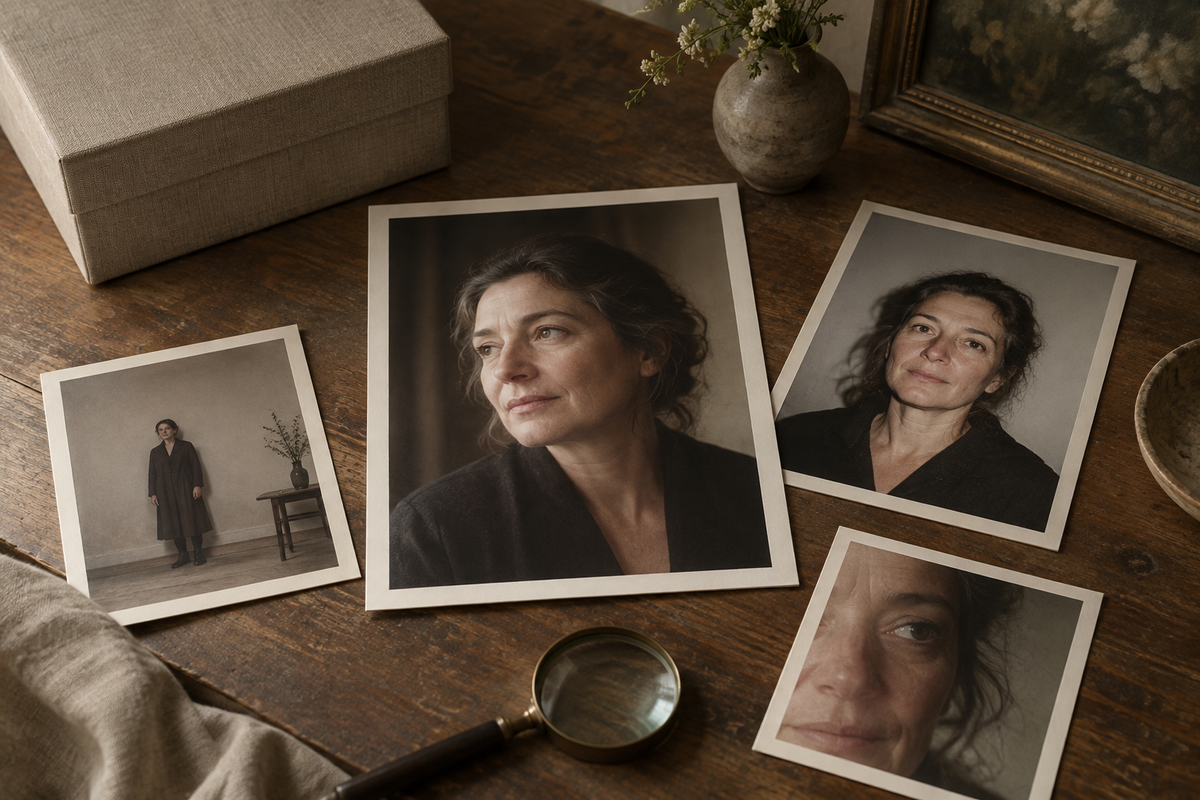
Start with recognition. Then look for the light, detail and posture that will help a painter understand what you see.
Different references answer different questions about a sitter. AI-generated conceptual illustration with a fictional person.
The photograph you love most may be slightly untidy. A sleeve is rolled up, the background is busy, someone has just turned toward the camera. Yet the expression is unmistakable. That recognition is a useful place to begin a painted portrait.
Choosing a reference is not a competition for the most professional-looking picture. It is a way of giving the artist reliable information about a particular person. A beautiful photograph can conceal what the painter needs; an ordinary one can reveal it.
First, choose the expression you know
Look through a small selection without enlarging each face immediately. Which image feels most like the person in daily life? Is it the open smile, the slight reserve, the concentrated look when they listen?
A portrait will hold its expression for a long time. There is no obligation to choose the biggest smile or the most ceremonial moment. A quieter expression may feel more familiar. When you send the photographs, explain what you recognize in your favorite. “This is how she looks when she is about to laugh” tells an artist something that image resolution alone cannot.
Look for light that describes the face
Useful light lets you understand the shape of the forehead, cheeks, nose and jaw. Gentle light from a window often produces readable transitions between light and shadow. Deep backlighting, very dark eye sockets or a flash that flattens every plane may leave less information to work with.
None of these conditions automatically rules an image out. The question is what can be understood confidently and what needs a second reference. If a favorite picture hides one side of the face, add an image taken in clearer light from a similar angle.

Keep the original file
Send the original photograph when you have it, before filters, screenshots or repeated messaging-app compression. The size of the face within the photograph matters as much as the overall image dimensions. A large landscape file can still contain a face too small to study.
There is no single pixel count that guarantees a successful painting. The proposed size, crop and degree of detail all matter. Enlarging a tiny image does not recover information the camera never recorded. Likewise, an AI-enhanced face may introduce plausible details that are not the sitter's. If an image has been restored or altered, send the unedited source alongside it.
Consider the angle and the distance
A close selfie can make the nearest features appear more prominent. A photograph taken from well above a child's head tells a different story from one taken near their eye level. The painter can interpret these effects, but a second, more neutral view is helpful.
If you are taking new photographs, step back enough to avoid crowding the face and keep the camera near the sitter's eye level. Include some shoulders and torso, even if you expect a close crop. A little extra space preserves options for composition.
Let supporting photographs do different jobs
A useful set is not twenty almost identical smiles. Send the favorite expression, a clear view of the head, an image of the intended posture and any details that matter: glasses, a familiar jacket, the way a hand rests.
Label which photograph should guide the likeness and which ones are background information. If the portrait includes several people, explain their relative heights and the relationship you want the composition to convey. Our guide to combining family photographs explores that separate compositional problem in more detail.

Clothing and background are choices to discuss
You do not have to discard a strong expression because the room behind it is cluttered. A painted background can be simplified. Clothing can sometimes be adjusted when suitable references exist. But substantial changes should be discussed before the composition is agreed.
Send an additional view if a sleeve, hand or part of the body is missing and you want it included. A painter should not have to guess at an important personal detail when another photograph can answer the question.
If the photograph is old or irreplaceable
An older print may be the only record of someone you want remembered. Share the best available scan and any other photographs from roughly the same period. Explain what is known and what is uncertain.
A sensitive portrait may still be possible when the source is imperfect. The conversation should distinguish what the images show from what would require interpretation. Keep the physical original safe and begin with a digital copy.
A small selection is enough to start
Choose a handful of photographs, identify your favorite, and add a sentence about why it matters. Include any uncertainty about the intended crop, clothing or age you want represented. You do not need to resolve every choice before approaching the atelier.
The most useful question is simple: do these images help someone who has never met the sitter see what makes them recognizable to you?